













Logo

Cadoola Mobile For Users In Italy

2026 Overview for users in Italy seeking phone access, readable account, clear payments, and more organized sessions.

Fortune Gems 2 Slot

Table of Contents

  • The Dog House Megaways Slot
  • Lucky Joker 10 Extra Gifts Slot
  • Sword of Ares Slot
  • Floating Dragon Hold & Spin Slot
  • Leprechaun Riches Slot
  • Fruit Cocktail Slot
  • The Dog House Megaways Slot
  • Sword of Ares Slot
  • Fruit Million Slot
  • The Dog House Megaways Slot
  • Big Fisherman Slot
  • Big Fisherman Slot
  • Seven Books Unlimited Slot
  • Cadoola Fortune Slot
  • Sword of Ares Slot
  • Floating Dragon Hold & Spin Slot
  • 9 Mad Hats Slot
  • Floating Dragon Hold & Spin Slot
  • Big Bass Splash Slot

Why Cadoola App Matters In 2026

In 2026, the quality of a phone platform is measured in a few taps. An adult user opens the account, checks the balance, reviews the lobby, and immediately decides whether to stay or not. There isn't much time to convince them. If the path is clear, they stay. If, instead, they have to search for every function in different places, the impression worsens in less than a minute.
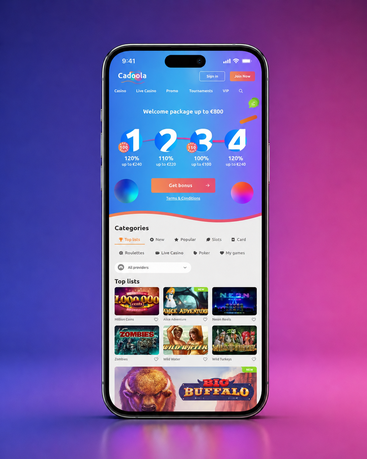
App 1

Cadoola disponibile in Italy ha senso soprattutto per chi usa lo smartphone come dispositivo principale, non come soluzione di emergenza. Questo cambia tutto. La struttura deve aiutare a entrare, orientarsi, verificare i movimenti e uscire senza confusione. Non basta che la piattaforma si apra sul telefono. Deve comportarsi bene sul telefono.

Imagine a ten-minute break between two appointments. Usually, the player doesn't want to study all the sections. They want to immediately understand where the profile, cashier, history, and access to previously played games are. This is where the mobile design proves whether it was truly intended for daily use or just hastily adapted.

Another aspect weighs more than it seems: the pace. On desktop, many users explore for longer. On a smartphone, however, they log in more often but stay for shorter periods. This means that menus, filters, buttons, and messages must work more directly. Every extra step is immediately noticeable.

When the Phone Makes Everything Easier

The phone makes everything simpler when it reduces friction, not when it adds effects. If you're waiting for a friend, you might check your account, open a familiar game, and close it after a few minutes. This is usually the real behavior. A useful smartphone platform supports precisely these short and repeated actions, without forcing the user to start from scratch every time.
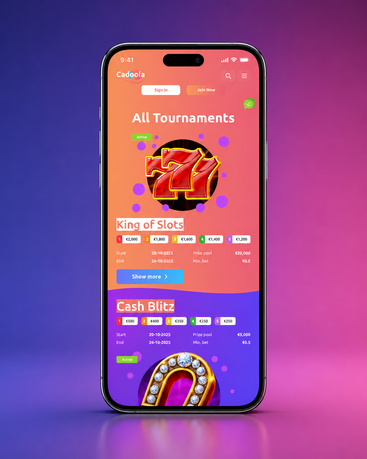
application 2

Registration, Profile, and First Access Without Errors

Registration is the first serious test. Not because it's the most exciting part, but because it reveals if the account is well-organized. Readable fields, simple messages, and a coherent flow build trust even before seeing the lobby. When this beginning is confusing, everything else is also perceived worse.

Many adult users make the same mistake: they want to get to the game immediately and treat the profile as a formality to be quickly dealt with. In practice, it's advisable to do the opposite. First, open the account calmly, then check the main sections, and only then think about the first deposit. This order reduces small errors that become annoying more quickly on the phone.

Imagine registering in the evening, tired, with little patience, and the phone in one hand. Usually, at this moment, you mistype an email, skip a field, or close a window without reading it properly. An orderly procedure doesn't eliminate carelessness, but it makes it less dangerous.

The profile is also important for another reason: it's the basis of control. From there, the user understands where history, personal settings, limits, and breaks are located. If these functions are hidden or poorly distributed, the platform loses clarity precisely where it should offer the most.

A First Deposit Made With Consideration

The first deposit should serve to test the process, not to force the session. Choose a method you know, enter an amount consistent with the time you have available, and immediately check if the balance updates legibly. Imagine you're out and want to start in two minutes. Usually, the safest way not to complicate your life is to start with a moderate amount and use the first access as a practical verification of the system.

Check Balance and History Immediately

Balance and history are two areas that should be visible almost without thinking. If the user has to search for them every time, something is wrong with the structure. In a normal scenario, the person logs in, looks at the total available balance, opens the list of recent movements, and decides whether to proceed or stop. If you perform this check on your first access, you'll understand much sooner if the platform truly adapts to your habits.

Games, Available Time, and Smarter Choice

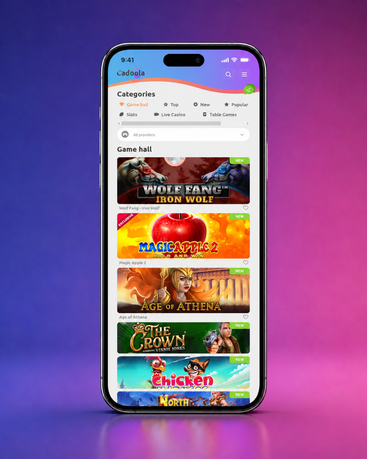
Choosing a game on a phone is not like choosing it on a big screen. The margin for exploration is reduced, attention shifts, and the average time is often shorter. Therefore, an effective mobile lobby doesn't just need to display everything. It must help the user narrow down the field without frustration.

App 3

In practice, almost everyone follows one of three common paths. They return to a known title, use a quick filter, or leave if they don't immediately find a foothold. Imagine a lunch break. Usually, no one wants to spend half the time scrolling through unclear categories. If the platform supports this logic, usage remains more linear.

Visual comfort also counts. A game that looks tidy on a desktop can become tiring on a smartphone if buttons, text, and notifications are cluttered. The user might not notice it immediately, but their behavior changes: they tap faster, read less, check their balance less carefully. From these details, the feeling of order or chaos arises.

Elemento Da Valutare

Cosa Cerca L'Utente

Why It Helps

Lobby Principale

Accesso rapido ai titoli recenti

Riduce il tempo perso a scorrere

Personal Area

Balance, Profile, and Recent Activity

Helps check the account before and after

Cashier Section

Metodo, importo e stato dei movimenti

Rende più chiara la gestione del denaro

Filtri Essenziali

Ricerca per categoria o ritmo

Evita scelte casuali

Strumenti Di Pausa

Limiti e stop temporanei

Aiutano a mantenere ordine

Payments, Withdrawals, and Reading Transactions

The cashier is where a mobile platform stops being just convenient and becomes truly reliable. Here, it's not enough for the button to work. The user wants to quickly understand what they are doing, see if the amount is correct, read the operation status, and return to the history without getting lost in useless loops.

On a smartphone, this aspect weighs even more. The screen shows fewer elements at once, so each label must be clearer. Imagine depositing shortly before an evening session. You usually want to do four things: choose the method, confirm the amount, see the updated balance, and check that the transaction is recorded. If any of these four steps remains opaque, trust decreases.

The same applies to withdrawals. The most common mistake is not technical, but behavioral: many users repeat an action because the page does not update immediately. A well-made structure avoids this problem by showing readable states and a nearby history that is easy to open and useful to interpret.

Nel 2026 i giocatori adulti in Italy si aspettano proprio questo: meno rumore, più chiarezza. Non cercano pagine spettacolari. Cercano un conto che permetta di vedere bene cosa è successo e cosa no.

How to understand if a transaction is just pending

When a transaction doesn't seem immediate, the first rule is not to repeat it. Instead, open the history, check if the request appears, and read the status before doing anything else. Imagine using the platform while switching from Wi-Fi to mobile data. Usually, a lot of confusion arises from there, not from the account. A calm check in the transaction section avoids errors that are more annoying than waiting a few seconds.

Responsible Use, Limits, and Breaks That Truly Matter

The phone makes access simple, and precisely because of this, personal rules matter more. On a desktop, there's a small entry ritual: you sit down, open the computer, decide to start. From a smartphone, this filter almost disappears. The user can access anywhere and anytime. This is convenient, but it also makes automatic habit easier.

Per questo gli strumenti di controllo non dovrebbero stare nascosti. Un utente adulto che usa la piattaforma nel rispetto delle regole applicabili e dei limiti personali tende a cercare sempre le stesse cose: quanto ha speso, quante volte è entrato, se ha bisogno di ridurre il ritmo, se è il momento di prendersi una pausa. Se queste funzioni sono visibili, il conto diventa più governabile.

Imagine reopening the service three times in one evening without a specific reason. Usually, it's not a big event, but it's already a signal. The problem isn't the single session. It's the repetition without a plan. Break tools serve precisely to interrupt this mechanism before it becomes habitual.

Limits work well when they are concrete. Maximum time, maximum amount, maximum number of accesses per day. Simple, readable, easy-to-remember rules. Vague promises, on the other hand, work much worse, especially on the phone.

When a Short Break Is More Useful Than Willpower

A short break is often more effective than personal discipline alone because it transforms a mental decision into a real limit. If you log in too often, check your balance for no reason, or reopen the lobby as soon as you've closed it, a temporary suspension can help you more than a general resolution. Imagine an evening where you keep returning to the platform every half hour. Usually, it's precisely at that moment that a simple barrier becomes the smartest choice.

When a Stronger Measure Makes Sense

In some cases, a light break is not enough. If the behavior repeats week after week, if you continue to ignore the limits you set, or if access from the phone becomes too automatic, a stronger measure may be more appropriate. It's not an extreme choice. It's a practical tool to put distance between you and the habit. Imagine telling yourself every evening that you'll just do a quick check and always finding yourself in the same pattern. Usually, this repetition is the real signal to listen to.

Assistance, Technical Issues, and the Final Impression in Italy

Assistance isn't just for when something is obviously broken. It's also useful when small but frequent doubts arise: a screen that updates poorly, a balance that doesn't seem to change immediately, a section that disappears after a network change. On a smartphone, these details weigh heavily because the user expects speed and continuity.

Before asking for help, it's always worth doing a minimal check. Close background apps, verify the connection, reopen the relevant page, and consult the history. Imagine you're out and about using an unstable network. Usually, most problems arise from the phone's technical context, not from an account error.

Overall, Cadoola available in Italy can be interesting for those seeking quick access, frequent checks, and short or intermediate sessions from a smartphone. It's not so much about visual effects. What matters more is how the platform accompanies concrete actions: logging in, reading the balance, using the cashier, choosing a title, verifying activity, and stopping when needed.

The final impression, therefore, depends on a simple question: does the service really help to do the essential things without confusing? If the answer is yes, then the mobile experience works. If the answer is no, no graphics can compensate in the long run.

What to do if a screen doesn't load correctly

When a screen doesn't load, avoid repeated touches. Check the network, refresh the page, close any background applications, and see if the operation is already registered in the history. If you are switching between connections, this is often the most likely cause. Usually, a few ordered checks solve more than the nervousness of the moment.

FAQ

The most orderly way to start is to divide the journey into simple phases: registration, profile check, visit to the cashier, reading the history, and only then a potential first session. Many users do the opposite because they want to get to the games immediately, but this way they risk not understanding where the really important areas are. If the first access is mainly for orientation, the rest of the experience becomes more readable.

Often yes, because the phone works well when you want to enter quickly, check your account, and choose something without long preparations. However, this doesn't mean that every short session is automatically managed well. It still requires a limit decided in advance, otherwise the convenience of access can turn a few minutes into a continuous presence made up of repeated openings and unclear decisions.

Before the first deposit, it's worth looking at three areas: the available method, the transaction history, and the control tools. The point isn't just to understand if you can pay, but to verify if the entire section is readable on your device. A first simple test, done calmly, tells you more about the platform than a session started in a hurry.

The most useful signal is the difference between the initial plan and the actual behavior. If you logged in to check your balance or for a short session and find yourself still in the lobby much later, something has already changed. The number of accesses on the same day is also an important clue. When you start logging in almost by reflex, it's time to stop and review your pace.

A temporary break becomes useful when you feel that access is too frequent, that you check your balance for no specific reason, or that you struggle to truly end the session. You don't need to wait for the situation to worsen. In fact, these tools often work best when used early, as a practical measure to interrupt an automatic repetition before it becomes a more rigid habit.

The history is almost always the most honest section. It shows you not only money coming in or going out, but also the pace of operations, the frequency of checks, and how you managed the account. Looking at it the day after, with a cool head, is often more useful than doing so only during the session, as it helps you compare perception with what actually happened.

The first thing to do is not to repeat the action. Open the history, check if the transaction appears and if the status is still pending. Many times the problem is just visual or depends on the phone's connection. If, after an orderly check, the situation remains unclear, then it makes sense to ask for assistance, explaining exactly what you did, at what time, and from which screen.

EN